Wellbeing Supportive Design ToolkitA toolkit for technology-makers interested in improving their technologies by applying wellbeing psychology to design. The toolkit includes the latest version of the Wellbeing Design Cards The toolkit helps you support key psychological needs through design. The content draws on decades of research in psychology and the toolkit has been tested with over 100 designers and researchers from across the world. Contents:
1. Wellbeing Design CardsDeck of 30 cards that provide insights and prompts for ideation, collaboration and design. In 4 suits (psychological needs, spheres of experience, diagnosis and strategies) these cards give quick and easy access to the core concepts of wellbeing psychology as applied to technology with real-world examples and strategies. > View Background research 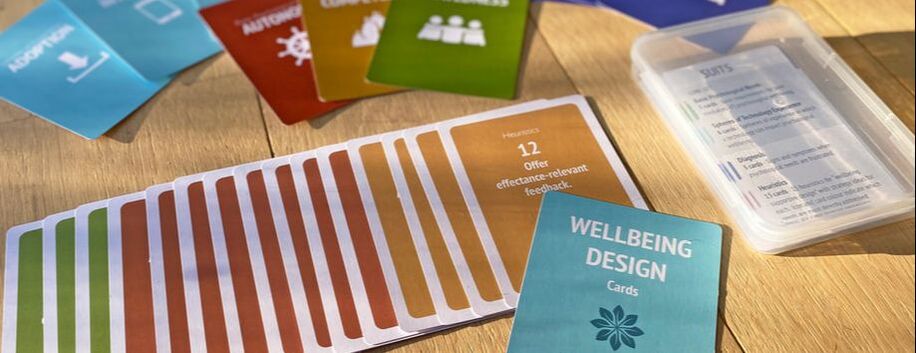 2. Design for Wellbeing - Workshop PlayboardDesign for Wellbeing Workshop - A 'Playboard' (something between a gameboard and a playbook) in the form of a free Miro template. It can be used to guide a group through an educational collaborative workshop on wellbeing supportive design (no facilitator required.). Grab your team and learn how to support wellbeing in all your technology projects. This 2-hour DIY online workshop includes videos, tools and hands-on activities and takes no preparation. Just grab a couple people and jump in. All materials and instructions are built into the board. The workshop has been refined with feedback from 60+ design professionals and is used as part of responsible design training at Imperial College London. > View Background research 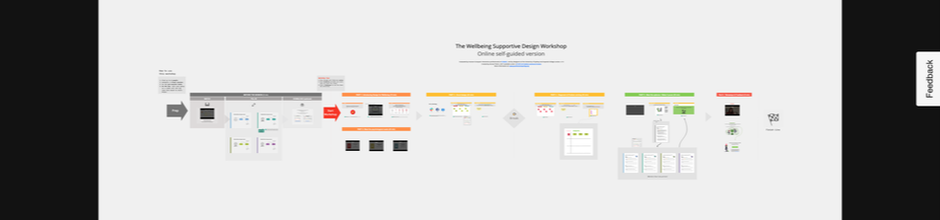 3. Heuristics ChecklistThis Heuristics checklist (PDF) includes a checklist of 15 heuristics for wellbeing supportive design. > View Background research 4. Strategies CheatsheetThe Strategies cheatsheet (PDF) includes 30 design strategy examples that demonstrate various ways (almost design patterns) that the 15 Wellbeing Supportive Design heuristics can be supported within specific contexts. > View Background research 5. Prompt sheetThe Prompt sheet (PDF) includes trigger questions for prompting design ideation and evaluation from the perspective of psycholofical wellbeing. These can also be reformulated as 'How might we' questions.
> View Background research Comments are closed.
|